
After a collision, non-impound accident recovery can take your vehicle directly from the scene to a destination you choose, rather than to impound storage. This is a private transport arrangement for situations where police have not directed the vehicle’s removal. It is separate from recovering a vehicle held under police direction.
It’s understandable to be unsure what happens next after a crash. You may be concerned about where your vehicle will go and how it can be moved safely. YSF Recovery provides direct transport to your chosen destination without holding the vehicle in storage.
This guide explains how non-impound recovery works, how it differs from police-directed removal and when it may suit your situation. You’ll also find out what details to share when arranging transport, including the vehicle’s condition, its location and where you want it taken. Having this information ready helps make the collection and destination clear.
Key Takeaways
- Non-impound accident recovery means arranging direct transport, but the term alone doesn’t determine whether police are involved.
- Know who is coordinating the recovery and the intended destination before transport is arranged.
- Accurate details about the vehicle’s location and condition help organise a suitable collection.
- Have the vehicle’s make, model and preferred destination ready when arranging recovery.
- Share photographs only when it’s safe and practical, and describe any damage that could affect loading.
Non-impound accident recovery: what it means, and what it does not
Non-impound accident recovery is direct vehicle transport from a collision scene or another agreed recovery location to a chosen destination, without the vehicle being held at an impound facility. You might choose a home address or a repairer. The term describes how transport is arranged. It doesn’t, by itself, confirm whether police are involved or determine what must happen at the scene.
Police directions and road-safety requirements can affect when and how a vehicle is moved. Follow any instructions from police or another authority, and clarify what they mean for recovery before transport is arranged. A private recovery service transports the vehicle; it doesn’t make official decisions about the collision or the scene. The general distinction between standard and statutory recovery is outlined in Vehicle recovery.
Recovery arrangements at a glance
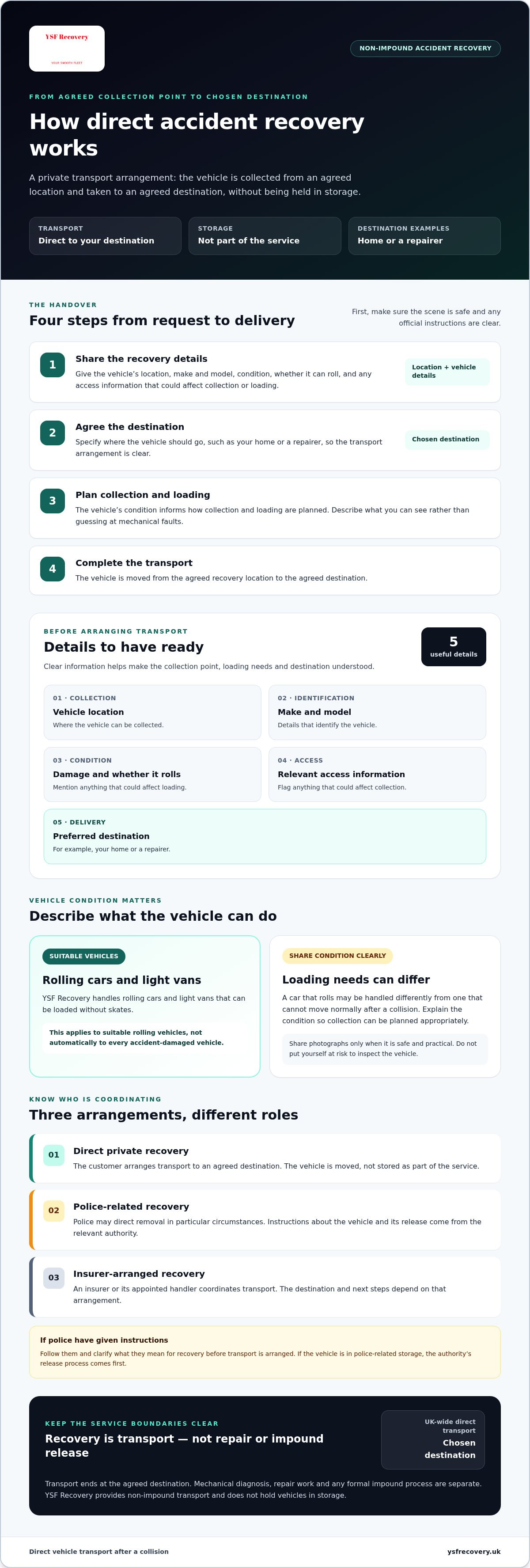
- Direct private recovery: The customer arranges transport to an agreed destination. The vehicle is moved, not stored as part of the service.
- Police-related recovery: Police may direct removal in particular circumstances. Any instructions about the vehicle and its release come from the relevant authority.
- Insurer-arranged recovery: An insurer or its appointed handler coordinates transport. The destination and next steps depend on that arrangement.
What does non-impound accident recovery involve?
The recovery provider collects the vehicle from the agreed location and transports it to the agreed destination. YSF Recovery provides this direct transport across the UK without holding vehicles in storage. The service covers moving the vehicle between locations. It is separate from mechanical repairs and any formal impound process.
The vehicle’s condition affects how it can be loaded. A car that rolls may be handled differently from one that cannot be moved normally after a collision. YSF Recovery recovers rolling cars and light vans that can be loaded without skates. Describe the vehicle’s condition clearly when arranging transport, as loading needs vary.
How is it different from police impound recovery?
Police impound recovery is a separate process that may apply when police direct a vehicle’s removal. It can involve instructions about where the vehicle is held and how it can be released. Those details depend on the circumstances and the relevant authority. If police have given you instructions, follow them and use the authority’s contact details for case-specific guidance before making transport arrangements.
YSF Recovery provides non-impound transport, not impound release services. If the vehicle is available for private recovery, it can be transported from its location to a destination you choose. If it has been taken into police-related storage, the authority’s release process comes first. Keeping these arrangements distinct makes clear who is coordinating the vehicle’s next move.
How non-impound accident recovery works, from request to delivery
Once the scene is safe and any official instructions are clear, arranging non-impound accident recovery is a practical handover. Provide the vehicle details, agree the destination, arrange collection and complete the transport. Clear information helps YSF Recovery plan a suitable collection and take the vehicle where you want it to go.
What happens when recovery is arranged?
Start with the vehicle’s location and details that identify it. Give the make and model, describe its condition and say whether it can roll. State the destination, such as your home or a repairer, and mention anything that could affect access or loading. These details help the recovery plan reflect the vehicle and collection point.
The process follows a straightforward sequence:
- Share the recovery details. Provide the vehicle’s location, make and model, condition, and any relevant access information.
- Agree the destination. Specify where the vehicle should be taken so the transport arrangement is clear.
- Arrange collection. The vehicle’s condition informs how collection and loading are planned.
- Complete transport. The vehicle is moved from the agreed recovery location to the agreed destination.
A car that can roll may have different loading needs from one that cannot move normally. YSF Recovery handles rolling cars and light vans that can be loaded without skates. This applies to suitable rolling vehicles, not automatically to every accident-damaged vehicle. Describe what you can see rather than guessing at mechanical faults.
Keep any scene updates brief and safe. Don’t put yourself at risk to inspect the vehicle or take photographs. Follow instructions from police or other authorities present. The article’s accident checklist can help you organise other practical steps once immediate safety has been addressed.
What does recovery cover, and where does it stop?
Recovery means transporting the vehicle. It isn’t a mechanical diagnosis or repair, and YSF Recovery doesn’t hold vehicles in storage. If the destination is a repairer, transport ends there; arrange repair work separately with the repairer.
Transport can also sit alongside other arrangements. An insurer may coordinate its own recovery or provide instructions about the claim, while a private recovery request covers a journey to an agreed destination. If an accident involves an uninsured or untraced driver, the Motor Insurers' Bureau (MIB) provides information about its role in compensation. That’s separate from arranging the vehicle’s transport.
YSF Recovery provides direct transport across the UK to customers’ chosen destinations. Arrange direct accident recovery with the vehicle and destination details ready.
Compare accident recovery options by destination, vehicle condition, and control
The right recovery arrangement depends on who is coordinating the move, where the vehicle needs to go and what its condition allows. These routes can overlap: an insurer may be involved in a claim while transport is arranged separately, and police directions may affect what can happen at the scene. This comparison explains the usual distinctions without assuming one option fits every collision.
| Arrangement | Who coordinates transport? | Intended destination | What it covers |
|---|---|---|---|
| Direct private recovery | The customer arranges transport with a recovery service. | A destination agreed with the customer, such as a home address or repairer. | Vehicle collection and transport. Repairs and storage are separate. |
| Insurer-coordinated recovery | The insurer or its appointed handler organises the transport. | Set by the insurer’s arrangement and the claim circumstances. | Transport arranged under that process. Policy terms and next steps can vary. |
| Police-related process | The relevant authority directs or coordinates the vehicle’s removal. | Determined by the applicable instructions and circumstances. | Removal under that process. Any release or follow-up is handled separately. |
When might direct, non-impound recovery suit the situation?
Direct recovery may suit you when you want to arrange transport to a particular destination instead of having the journey coordinated through an insurer. For example, you can specify a repairer you intend to use. Private recovery may not suit every situation: police instructions, access at the scene and the vehicle’s condition can affect the next steps.
How do vehicle condition and service scope affect the choice?
A vehicle that rolls is different from one that cannot move on its wheels. Tell the recovery service what you know about its condition, rather than assuming a damaged car can be loaded like any other vehicle. YSF Recovery provides rolling-vehicle recovery for cars and light vans that can be loaded without skates. This applies to suitable rolling vehicles, not every collision-damaged vehicle.
Before choosing an arrangement, consider these practical questions:
- Is the destination already agreed, or will an insurer coordinate it?
- Has a police or other authority given instructions about moving the vehicle?
- Can the vehicle roll, and is there visible damage that could affect loading?
- Do you need transport only, or are you also arranging separate repair or claim steps?
Insurer policies and official directions vary. Follow the instructions that apply to your incident, and keep transport arrangements distinct from repair or claim decisions. If direct transport to your chosen destination suits your circumstances, arrange non-impound accident recovery with YSF Recovery.
Arrange non-impound accident recovery: details to have ready
A clear recovery request makes it easier to plan collection and transport. Before arranging non-impound accident recovery, gather the vehicle’s location, its condition and your preferred destination. Don’t put yourself at risk to find information. Follow any instructions from police or a road authority before the vehicle is moved.
What information helps organise a recovery request?
Share details that help identify the vehicle and its collection point. Give the destination clearly, such as a home address or repairer, and mention anything that could affect access. If you’re unsure about damage, describe what you can see rather than trying to diagnose a mechanical fault.
- Location: Give the clearest available collection point and explain any access restrictions.
- Vehicle: Provide its type, make and model, and registration.
- Condition: Describe visible damage and say whether the vehicle can roll.
- Destination: Provide the address or agreed location where it should be taken.
- Instructions: Pass on any relevant directions already received from police, a road authority or your insurer.
Photographs can help show visible damage or the vehicle’s position, but take and send them only if it’s safe and practical. Don’t step into traffic, approach an unsafe vehicle or delay following official instructions to get a picture.
What should you consider before the vehicle is moved?
Deal with immediate safety first. Keep yourself and others clear of traffic, and don’t approach a vehicle if doing so could put anyone at risk. Follow police or road authority instructions where they apply. If you need a prompt for other scene actions, use a separate checklist for what to do after a car accident. Arrange recovery only after considering safety and official directions.
What to expect from YSF Recovery
YSF Recovery provides UK-wide non-impound recovery, transporting vehicles from collision locations directly to customers’ chosen destinations. The service covers collection and transport, not vehicle repairs, storage or impound handling. For suitable vehicles, YSF Recovery also recovers rolling cars and light vans that can be loaded without skates. As loading needs vary, give an accurate description of the vehicle’s condition.
Keep any insurer arrangements separate and share relevant instructions that may affect the vehicle’s movement. This makes the intended destination and the scope of transport clear from the start.
Take the next step after a non-impound accident
Have the location, vehicle details, condition and destination ready. Once it’s safe and any official instructions are clear, arrange direct transport with YSF Recovery. Arrange non-impound accident recovery.
Make your next recovery decision with confidence
After a collision, consider the vehicle’s onward journey separately from repairs, insurance discussions and any official process. Decide which destination supports your next step and whether someone can receive the vehicle there. Planning for access and handover can help avoid confusion when transport is arranged.
Once the scene is safe and any relevant instructions are clear, non-impound accident recovery can take the vehicle directly to your chosen destination. YSF Recovery arranges transport across the UK. Suitable rolling cars and light vans that can be loaded without skates can also be recovered. You can manage repair or claim arrangements separately.
Have your preferred destination in mind and take the next step when you’re ready. Arrange non-impound accident recovery with YSF Recovery.
Frequently Asked Questions
What does non-impound accident recovery mean?
Non-impound accident recovery is a privately arranged way to transport a vehicle without holding it at an impound facility. The term describes the recovery arrangement, not who caused the collision, whether the car is roadworthy or whether police attended. For example, a damaged car may be taken to an agreed repairer if scene instructions allow. If an authority has directed the vehicle’s removal, follow that process first.
Can an accident-damaged car be taken straight to my chosen destination?
Yes, direct transport to a chosen destination can be arranged when it’s suitable and any relevant instructions allow it. You might choose a repairer or another agreed address. Consider whether the destination can receive the vehicle and whether access is suitable for recovery. If your insurer is coordinating transport, its arrangements may affect the destination, so establish who is organising the journey before booking separate transport.
Is non-impound recovery the same as police recovery?
No. Non-impound recovery is a private transport arrangement, while police-related recovery follows an official process. If police have directed the vehicle’s removal or given instructions about it, a private recovery request doesn’t replace those directions. Follow the instructions you received and use the relevant authority’s contact details for questions about release. Police attendance at a collision scene alone doesn’t establish which recovery arrangement applies.
What information should I provide when arranging accident recovery?
Provide enough detail to locate and identify the vehicle and describe its condition. Share the collection point, vehicle type, make and model, registration, visible damage, and whether it can roll. Give the destination and mention relevant access details, such as a locked gate or restricted entrance. Pass on any instructions from police or your insurer. Take photographs only if doing so is safe and practical.
Can a vehicle be recovered if it cannot roll after an accident?
Damage, access and safe loading arrangements affect whether and how a vehicle can be moved. YSF Recovery’s rolling-vehicle recovery is for cars and light vans that can be loaded without skates. If the vehicle cannot roll, say so when describing its condition and report visible damage. Don’t try to push or move it yourself after a collision.
What happens if the police are still dealing with the accident scene?
Wait for police or the relevant road authority to give instructions about moving the vehicle, and follow their directions. Keep yourself and passengers away from traffic, and don’t approach a damaged vehicle or debris if it’s unsafe. If you’re unsure whether recovery can begin, use the contact details provided by the authority at the scene. Recovery arrangements must not interfere with official work.
Does non-impound accident recovery include repairs or vehicle storage?
No. Non-impound accident recovery covers collection and transport, not fault diagnosis, repairs or keeping the vehicle in storage. If you choose a garage as the destination, arrange any repair work with the garage separately. If the vehicle has entered police-related storage, its release is a separate official process. State the intended destination clearly so transport and any later work remain separate.

