
Can your vehicle go straight to a destination you choose, rather than being taken somewhere first and collected later? It can be a key concern when you’re already dealing with a breakdown or accident. Vehicle recovery to chosen destination gives you a direct option: YSF Recovery transports your vehicle to a practical place for its next step, without holding it in storage.
Choose a destination that suits the vehicle’s condition and what needs to happen next. That might be a garage for assessment, a home where the vehicle can be kept, or another address where someone is ready to receive it. Clear details about access and handover help make the delivery plan practical.
This guide explains how direct recovery works, how to choose a delivery point and what information to prepare. It also covers how YSF Recovery transports cars and light vans to chosen destinations, including UK-wide long-distance moves. With a clear plan, you can avoid arranging an unnecessary storage stop or separate collection.
Key Takeaways
- Vehicle recovery to chosen destination means transporting a vehicle from its current location to an agreed place for its next step.
- Accurate details about the vehicle and its condition help the recovery team plan how to load it.
- Compare a home, garage, dealership or other agreed address by considering the vehicle’s condition, next step and delivery access.
- Prepare the pickup location and destination details in advance. Remove personal belongings only when it’s safe and practical.
- YSF Recovery provides UK-wide transport for breakdowns, non-impound accidents and long-distance vehicle moves, with direct delivery to your chosen destination.
What does vehicle recovery to your chosen destination mean?
Vehicle recovery to chosen destination means transporting a vehicle from its current location to an agreed delivery point. Rather than taking it to a holding location first, the journey is planned around where it needs to go next. That could be a home, a garage, a dealership or another suitable address.
Direct destination recovery takes a vehicle from its current location to an agreed address, rather than holding it in storage or handling it as an impounded vehicle. The service is for moving the vehicle, not repairing it. Choosing a garage as the destination does not mean repairs are included.
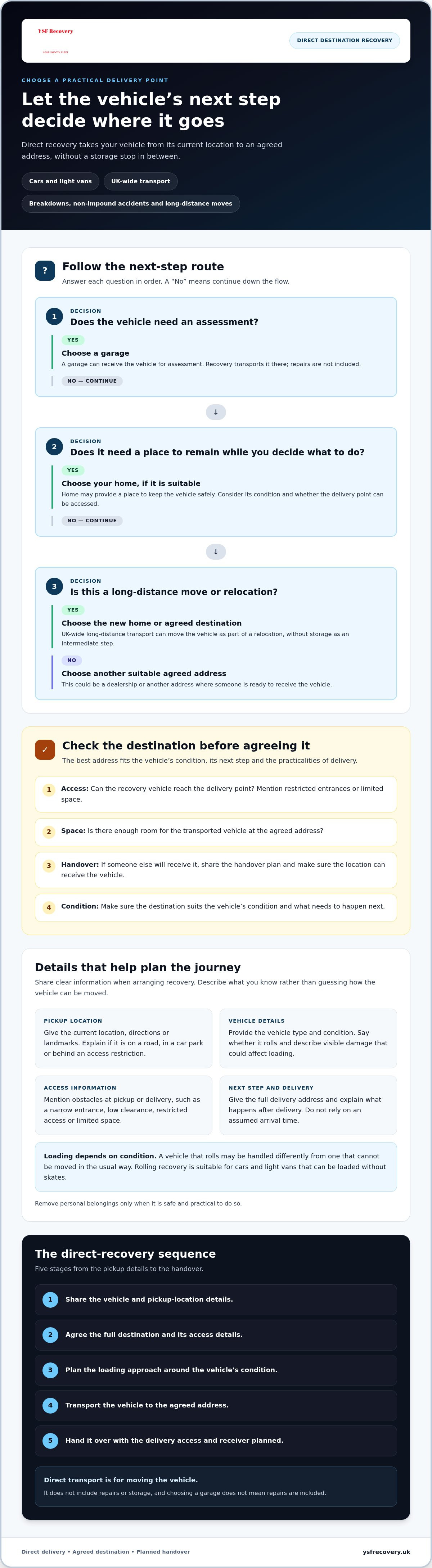
Treat the destination as part of the recovery plan, not simply an address to enter. First decide what needs to happen after delivery: does the vehicle need assessment, a safe place to remain, or transport as part of a move? That will help you select a useful destination and plan the handover. For a broad explanation of recovery methods and contexts, see this Vehicle Recovery Overview.
How is direct recovery different from storage or impound recovery?
With direct recovery, the vehicle is transported to the agreed destination instead of being held in storage. This gives you a clear route from its current location to the place where it can be dealt with next. The distinction is the delivery point, not a promise about what happens to the vehicle once it arrives.
Knowing the destination in advance helps you plan who will receive the vehicle and how it can be accessed. You can choose a place that suits its condition and next step, without arranging a separate collection from a storage facility. Direct transport does not include repairs or storage.
When might a driver need a chosen-destination recovery?
A broken-down car may need to go to a garage for assessment, or to a home where it can be kept safely while you decide what to do next. After a non-impound collision, direct transport can take the vehicle from the scene to a suitable agreed address. In each case, choose a destination that fits the vehicle’s condition and your plans for it.
Chosen-destination recovery can also help with a long-distance vehicle move when there has been no breakdown or collision. For example, you may need a car transported to a new home as part of a relocation. UK-wide long-distance transport provides a direct way to move a vehicle between destinations without using storage as an intermediate step.
How does vehicle recovery to a chosen destination work?
Once you’ve decided where the vehicle needs to go, provide the pickup details, vehicle information and delivery address when arranging recovery. Accurate information helps the recovery team understand the job and plan an appropriate loading approach. Agree the delivery address as part of the arrangement rather than leaving it until collection.
The five stages are to share the vehicle and location details, agree the destination, plan and load the vehicle, transport it, and hand it over at the agreed address.
- Give the pickup details. Provide the vehicle’s current location and useful directions or landmarks. Explain whether it’s on a road, in a car park or behind an access restriction.
- Describe the vehicle’s condition. Say whether it rolls and mention any visible damage that could affect loading. Describe what you know rather than guessing how it can be moved.
- Agree the destination. Give the full delivery address and choose a place that suits the vehicle’s next step. Include access details such as a restricted entrance or limited space.
- Plan and load the vehicle. The loading approach depends on the vehicle’s condition. A vehicle that rolls may be handled differently from one that cannot be moved in the usual way. Rolling recovery is suitable for cars and light vans that can be loaded without skates.
- Transport and hand over. The vehicle is taken to the agreed destination. Plan for access and make sure the location can receive it.
What information helps plan pickup and transport?
Have the vehicle type, current location and condition ready to share. Explain whether it rolls and describe any damage or other issues that could affect loading. Include access details at the pickup point, such as a narrow entrance, low clearance or a position that may make the vehicle difficult to reach. Do not assume every vehicle can be loaded in the same way.
It also helps to explain why the vehicle is being moved and what you plan to do after delivery. A garage may be receiving it for assessment, for example, while another address may be part of a planned move. This context helps keep the transport plan aligned with the vehicle’s next step.
What happens at delivery?
The vehicle is transported to the destination agreed when arranging recovery. Consider whether the recovery vehicle can access the delivery point and whether there is enough space for the transported car. If another person is due to receive it, share the handover plan with them. Provide clear delivery details when organising transport, and do not rely on an assumed arrival time.
For direct vehicle transport, arrange recovery to your chosen destination with the pickup, vehicle and delivery details to hand.
Which destination should you choose for vehicle recovery?
Choose a destination based on what needs to happen to the vehicle after it has been moved. A suitable address can make the next step simpler, whether you’re arranging an assessment, keeping the car at home or relocating it. With vehicle recovery to chosen destination, delivery is planned for an agreed address that fits the vehicle’s purpose and condition, rather than an impound or storage facility.
Use this comparison to weigh up practical options. Consider both the vehicle’s next step and whether there is enough access for delivery.
| Destination | When it may suit | Access point to consider |
|---|---|---|
| Home | You want to keep the vehicle at home or have it assessed there before deciding what to do next. | Consider the entrance, available space and whether the vehicle can be left safely at the address. |
| Garage | The vehicle needs a mechanic’s attention after delivery. | Make sure the garage address and delivery access are clear, and plan for the vehicle to be received there. |
| Dealership | The vehicle is being taken to a dealership for an agreed next step, such as an assessment or handover. | Check that the delivery point is accessible and that the destination is ready to receive the vehicle. |
| Another agreed address | You’re moving the vehicle as part of a relocation or have another practical delivery point in mind. | Provide clear directions and consider whether there’s room for the vehicle to be unloaded. |
Is home, a garage or another address the practical choice?
A home address may suit a vehicle you plan to keep there or have assessed before arranging its next step. A garage may be more practical if the vehicle needs mechanical attention. Recovery transports it to the destination; it does not include repairs. A dealership or another agreed address can suit a planned vehicle move, provided the location and access work for delivery.
Choose the place that avoids unnecessary arrangements. If a vehicle needs attention, taking it to a suitable garage may avoid organising another journey later. If you’re relocating a vehicle, delivery to an agreed address at the other end may be more useful than a holding location.
How does vehicle condition affect destination planning?
A vehicle that rolls may be loaded differently from one that cannot be moved in the usual way. YSF Recovery’s rolling vehicle recovery is for cars and light vans that can be loaded without skates. Do not assume the same loading approach suits every vehicle. Describe its condition clearly when arranging recovery so the team can plan appropriately.
Accurate details about a vehicle’s condition help the recovery team plan a suitable loading approach and destination journey. Include whether it rolls and any damage that could affect loading. Then choose a delivery point with suitable access and a clear next step for the vehicle.
How can you prepare for recovery to your chosen destination?
Preparation helps the recovery team understand what they’re collecting and where it needs to go. Gather the vehicle and location details, then consider access at both ends of the journey. For vehicle recovery to chosen destination, clear information helps keep transport planning focused on the vehicle’s condition and the delivery address.
Use this checklist when arranging collection:
- Vehicle details: Share the vehicle type and any details that help identify it.
- Current location: Give the pickup address and useful directions or landmarks, especially if the vehicle is not easy to see from the road.
- Vehicle condition: Explain whether it rolls and describe visible damage that could affect loading. Do not assume a vehicle can be moved in the usual way.
- Pickup access: Mention barriers, restricted entry or other access issues that could affect reaching the vehicle.
- Destination: Provide the agreed delivery address and note any access constraints there.
- Personal belongings: Remove items from the vehicle only if it’s safe and practical to do so. Do not put yourself at risk to retrieve them.
What should you tell the recovery team before collection?
Be specific about the vehicle type, whether it rolls and any visible damage that may affect loading. Give clear details about its current position, including access information that could help the recovery vehicle reach it. Share the intended destination as part of the arrangement. If there are restrictions at either address, explain them early so they can be considered in the transport plan.
How should you prepare the destination for delivery?
Consider whether the recovery vehicle can reach the destination and whether there is suitable access for the transported car. Clear the approach where practical and make sure the address is accurate. If another person is receiving the vehicle, arrange for them to be available for the handover, without relying on a specific arrival time. Preparing the destination can help avoid last-minute access problems.
Keep roadside safety separate from transport preparation. If you’re at the roadside, prioritise your own safety and follow any relevant instructions. Do not approach or move a vehicle if doing so would put you at risk. Preparing information can wait until you’re in a safe position; removing belongings is not essential to arranging recovery.
Once you have the pickup details, condition information and delivery address ready, you can set out the plan clearly. Arrange direct vehicle recovery with the details needed to organise transport to your chosen destination.
How YSF Recovery takes your vehicle to its chosen destination
YSF Recovery provides UK-wide vehicle recovery and transport, taking vehicles directly to a customer’s chosen destination without holding them in storage. The destination is part of the plan from the outset: share where the vehicle is being collected, where it needs to go and what condition it’s in so the transport can be planned around the job.
The service covers more than roadside breakdowns. A car may need moving after it becomes undriveable, following a non-impound collision, or as part of a planned long-distance move. In each case, recovery means transport to the agreed destination. It does not include vehicle repairs, storage or handling an impounded vehicle.
What types of recovery can YSF Recovery help with?
For breakdowns and home-start situations, YSF Recovery provides recovery and transport when a vehicle needs to be moved rather than driven. Following a non-impound accident, the vehicle can be transported from the scene to your chosen destination. This provides a direct route to an address suited to the vehicle’s next step.
Long-distance transport is available UK-wide for cars and light commercial vehicles. It can suit a planned relocation as well as a vehicle that needs moving after a breakdown or collision. The destination might be a home, garage, dealership or another agreed address. Choose it based on what needs to happen next, and provide clear pickup and delivery details when arranging the move.
YSF Recovery transports vehicles; it does not carry out repairs, provide storage, manage impounds or recover motorcycles. Keep this distinction in mind when planning what happens after delivery. If the car needs mechanical attention, for example, have it transported to a suitable garage, with the recovery and repair work arranged separately.
Is your vehicle suitable for rolling recovery?
YSF Recovery’s rolling vehicle recovery is for cars and light vans that can be loaded without skates. The vehicle’s condition matters: a car that rolls may be handled differently from one that cannot be moved in the usual way. Do not assume one loading method suits every damaged vehicle. Share an accurate description, including whether it rolls and any damage that could affect loading.
Before arranging recovery, have the vehicle type, current location, condition and chosen destination ready. Clear details help YSF Recovery plan transport that matches the vehicle and its delivery point. The journey is direct to the agreed destination, without a storage stop. Request vehicle recovery to your chosen destination and provide accurate vehicle details to get the arrangement under way.
Set your recovery plan in motion
Choose the delivery point that best supports what you’ll do with the vehicle afterwards. A clear destination gives the recovery plan a practical endpoint, whether you’re arranging transport after a breakdown or planning a vehicle move. Share the pickup location and destination, along with an accurate description of the vehicle, so the arrangements reflect the job.
YSF Recovery provides UK-wide transport, including long-distance moves, with direct delivery and no storage stop. Rolling recovery is suitable for cars and light commercial vehicles that can be loaded without skates. Consider these details when deciding whether the service suits your vehicle and the journey you have in mind.
For vehicle recovery to chosen destination, include the delivery point and vehicle condition in the plan from the start. Request vehicle recovery to your chosen destination and share the details needed to arrange transport.
A straightforward plan starts with a clear next step. Choose the destination, provide accurate information and arrange direct transport with YSF Recovery.
Frequently Asked Questions
Can I choose where my recovered vehicle is taken?
Yes. You can arrange for the vehicle to be transported to a destination that suits what you plan to do next. For example, you might choose a garage that’s expecting the vehicle or a home address where it can be kept. Share the full delivery address when arranging recovery and consider whether the vehicle can be received there. YSF Recovery transports vehicles directly to the chosen destination without a storage stop.
Does vehicle recovery to a chosen destination include repairs?
No. Vehicle recovery to a chosen destination covers moving the vehicle, not diagnosing or repairing it. If it needs mechanical attention, arrange transport to a garage and keep the repair work separate from the recovery. For instance, a non-starting car could be taken to a garage for assessment.
Can YSF Recovery transport a vehicle that will not start?
Yes. YSF Recovery can transport a non-starting vehicle from a roadside location or driveway to a designated garage or another chosen destination. A vehicle that will not start may still roll, so describe what it can and cannot do rather than using “won’t start” as the only condition detail. Mention visible damage or anything else that could affect loading, so the team has a clear picture of the vehicle.
Can a light commercial vehicle be taken to my chosen destination?
Yes. YSF Recovery transports light commercial vehicles, including vans, to chosen destinations. Rolling vehicle recovery is suitable for cars and light vans that can be loaded without skates. If the vehicle is a van, give its type and condition when arranging transport and explain whether it rolls. This helps describe whether it is non-starting but still able to roll, or whether damage may affect the recovery approach.
How much does recovery to a chosen destination cost?
The price depends on the recovery and transport required, so there is no single figure that applies to every journey. YSF Recovery charges for call-out and transport services. When requesting recovery, have the collection point, intended destination and vehicle details ready so the journey can be assessed for pricing. An online average or estimate may not reflect your particular arrangement, so use a price for the actual journey when planning your budget.
Can you recover a vehicle after an accident without taking it to an impound yard?
Yes. YSF Recovery provides non-impound accident recovery and can transport a vehicle from the scene directly to your chosen destination without holding it in storage. For example, you could arrange delivery to a garage or another suitable address. Share the vehicle’s condition and delivery details when organising transport. This service covers recovery after a non-impound collision, not impound handling or repairs.

