
After a collision, the order you act in matters. What to do after a car accident can feel unclear when you’re shaken, traffic is moving and damage needs attention. Start by checking for injuries and making the scene as safe as you can. Don’t focus on the vehicle until people are out of immediate danger.
You may be unsure which details to exchange, when to contact the police or your insurer, or what to do with a car that can’t be driven. This guide sets out the next steps in order, so you can protect everyone involved, record what happened and understand the reporting requirements that apply.
You’ll learn how to gather evidence, share details, notify your insurer and decide what to do with a damaged vehicle. After a non-impound collision, YSF Recovery transports rolling cars and light commercial vehicles to a destination you choose. Follow the steps below, prioritising safety throughout.
Key Takeaways
- Knowing what to do after a car accident starts with checking for danger and getting urgent help if anyone needs it.
- Record key details and gather useful evidence, including photographs and witness contact information.
- Tell your insurer promptly and follow your policy’s notification requirements, even if you’re unsure about making a claim.
- Don’t assume a damaged vehicle is safe to drive. Look for warning signs and consider whether it needs recovery.
- Once the scene is safe, decide where the vehicle needs to go. YSF Recovery transports vehicles from non-impound collisions to your chosen destination.
What to do after a car accident: make the scene safe first
Stop, check for immediate danger and find out whether anyone needs urgent help. If someone is seriously injured, there’s an immediate threat or another urgent emergency, call 999. Getting emergency help takes priority over exchanging details, photographing vehicles or completing paperwork.
Put people’s safety before vehicles, photographs or paperwork. Stay calm, move carefully and don’t put yourself or anyone else at greater risk to reach a vehicle or collect belongings.
What should you do in the first few minutes?
Follow this order. If you feel shaken, pause and take one step at a time.
- Stop and take stock. Switch off the engine if it’s safe, and look for immediate risks such as moving traffic, smoke or fire.
- Check people. Check yourself, your passengers and anyone else involved. Speak to them if you can, but don’t move someone who may be injured unless staying where they are presents an immediate danger.
- Call for urgent help. Contact 999 if there’s serious injury, immediate danger or another emergency. Give the operator your location as clearly as possible and follow their instructions.
- Keep clear of hazards. Don’t stand in traffic or approach damaged vehicles if doing so could put you at risk. Don’t attempt to move a person or vehicle if it isn’t safe.
Even if the collision seems minor, give everyone time to assess how they feel. Adrenaline can make it harder to notice pain or distress straight away. If someone’s condition worries you, seek urgent help rather than delaying to record damage.
How can you reduce further danger at the scene?
Make the collision easier for other road users to see only if you can do so safely. If you can operate your hazard lights from inside the vehicle, use them to warn approaching traffic. Don’t step into a live lane, cross moving traffic or reposition a vehicle if that would expose you to danger. A warning triangle or high-visibility clothing is not worth risking another collision.
Motorways and smart motorways need particular care. Don’t assume there’s a safe place to stop or follow a routine that could put you in a live lane. Follow signs, signals and instructions from road staff or emergency services. Use official guidance for the specific road, as procedures can differ from those on ordinary roads. If there’s immediate danger, call 999 and follow the operator’s directions.
Road collisions are recorded and analysed across Great Britain. The Road Casualties Great Britain overview explains the scope of that information. At the scene, however, focus on people and immediate risks. Once everyone is safe and urgent help is arranged, exchange details and record what happened.
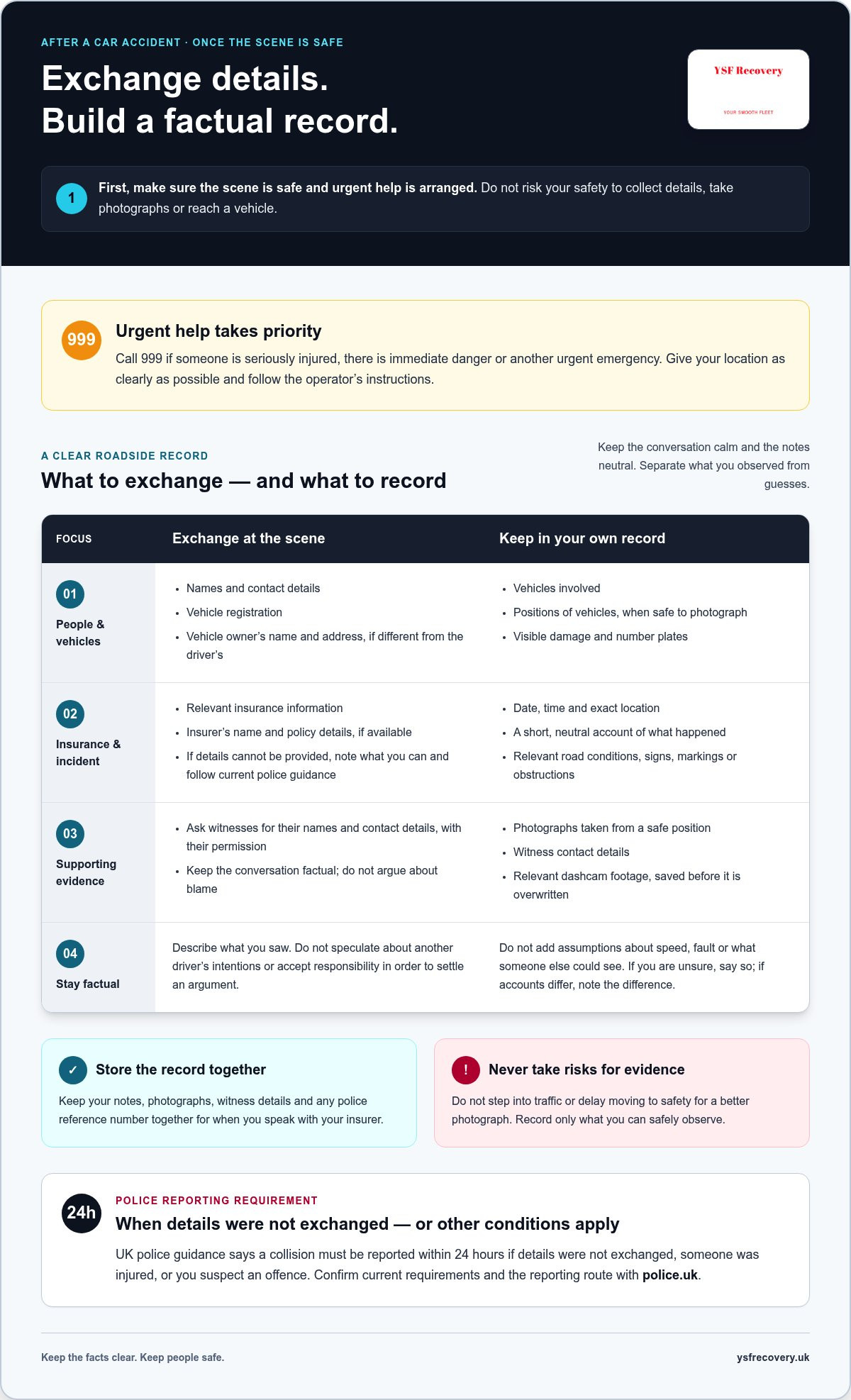
After a car accident, exchange details and record what happened
When the scene is safe and urgent help is arranged, exchange details calmly and make a clear record. Capture the facts while they’re fresh, and keep what you observed separate from guesses about how the collision happened.
Which details should drivers exchange after a collision?
Share your name and contact details, vehicle registration and the name and address of the vehicle’s owner if they’re different from yours. Give relevant insurance information, such as your insurer’s name and policy details if available. Record the other driver’s details carefully. If they can’t provide information at the scene, note what you can and follow current police guidance.
Keep the conversation factual. Don’t argue about blame or speculate about what another driver intended. You can describe what you saw without accepting responsibility. Check current official police guidance for the rules that apply where the collision happened. In the UK, police guidance says a collision must be reported within 24 hours if details weren’t exchanged, someone was injured or you suspect an offence. Confirm current requirements and the reporting route with police.uk.
What evidence can help explain what happened?
When it’s safe, take photographs from a safe position. Capture the vehicles’ positions, visible damage, number plates and relevant road conditions, such as signs, markings or obstructions. Don’t step into traffic or delay moving to safety for a better angle. Ask witnesses for their names and contact details, with their permission, and save relevant dashcam footage before it’s overwritten.
Make a written note as soon as you can. Include the date, time and exact location, the vehicles involved and a short, neutral account of events. For example, record “my car was travelling straight when the other vehicle entered the junction” if that’s what you observed. Don’t add assumptions about speed, fault or what someone else could see. If you’re unsure, say so.
Store your notes, photographs, witness details and any police reference number together. This gives you a consistent record when speaking with your insurer. If accounts differ, note the difference rather than trying to resolve it at the roadside. Clear, factual records help explain what happened without relying on memory alone.
Once the information is recorded and the scene is safe, consider what to do if the vehicle can’t be driven. Non-impound accident recovery transports a vehicle involved in a collision to your chosen destination.
Car accident insurance claims: notify your insurer and know your options
Once immediate safety is dealt with and you’ve recorded the collision, contact your insurer promptly. Check your policy’s notification conditions and follow them, even if you don’t plan to make a claim. Some policies require you to report an incident whether or not you’re seeking payment. Don’t assume the same deadline applies to every driver or policy.
Knowing what to do after a car accident includes giving your insurer a clear account, not deciding who is legally responsible. Explain what you know, identify anything you’re uncertain about and don’t present guesses as facts. Your insurer can assess the information and explain the next steps under your cover.
What information should you prepare for your insurer?
Gather your notes before you call or submit a claim. An organised record can help you answer questions accurately and avoid relying on memory later. Keep these details together:
- The collision date, approximate time and location.
- The vehicles involved, registration numbers and the other driver’s contact and insurance details, if available.
- A factual account of what you saw and what happened before and after the impact.
- Photographs of the vehicles, visible damage and road conditions, plus witness names and contact details.
- Any police reference number and relevant messages or correspondence about the incident.
Share evidence when requested, and keep copies for your own records. If you discover new information, update your insurer rather than changing your original account without explanation. Follow the notification process and time limits in your policy documents. If you’re unsure how a condition applies, ask your insurer to explain it.
What if the other driver is uninsured or cannot be traced?
If the other driver appears uninsured or has left without being identified, report the incident to the police and tell your insurer. The Motor Insurers’ Bureau (MIB) may provide a route for some claims involving uninsured or untraced drivers. It’s separate from your insurer, and its eligibility rules and evidence requirements apply. Check the MIB’s current claims guidance before starting an application. Don’t assume a claim will be accepted or that compensation is guaranteed.
An insurer handles claims under your policy; the MIB may assist in specified uninsured or untraced-driver cases. Keep your records accessible while either organisation reviews the incident, and respond to requests with accurate information. A damaged vehicle may need a safe onward journey while insurance discussions continue. Non-impound accident recovery transports a vehicle involved in a collision to your chosen destination.
Damaged car after an accident: decide whether it is safe to move
A car can look driveable and still be unsafe. A damaged bumper may seem like the only issue, but a visual check can’t confirm that the vehicle is roadworthy. Don’t risk driving just to avoid waiting or inconvenience. If you’re unsure, stop in a safe place and arrange a suitable assessment or recovery.
Make this decision separately from your insurance claim. Safety comes first, but your policy may set conditions for recovery or require you to contact your insurer before authorising it. If the vehicle or its position creates immediate danger, get yourself to safety and contact emergency services. Don’t delay urgent action to settle a claim or obtain approval.
When should you avoid driving a damaged car?
Don’t continue if you notice signs that could affect control, visibility or safe operation. These include leaking fluid, a damaged or misaligned wheel, smoke, an unusual burning smell, impaired lights or windows, or damage that prevents a door from closing securely. A warning light, unusual noise or change in how the car steers or brakes is also a reason to stop somewhere safe.
These signs don’t identify a specific fault, and their absence doesn’t prove the car is safe. Don’t crawl under the vehicle or touch leaking substances to investigate. If you suspect a problem, avoid driving and seek suitable assistance. A roadside visual check can’t confirm roadworthiness.
What should you consider before arranging vehicle recovery?
First consider your position. If the car is in a hazardous place, follow official instructions for that road and focus on getting people clear of danger. Don’t try to push or drive the vehicle through moving traffic. Once it’s safe, note whether the car can roll, where it is and any visible damage that may affect how it can be moved.
Where circumstances allow, check your policy or speak to your insurer before authorising recovery. Ask what information they need and whether they have specific requirements for the vehicle’s onward transport. Keep a record of any instructions. If an urgent hazard means you must act first, explain the circumstances to your insurer as soon as you can.
Before arranging transport, decide where the vehicle should go and gather practical access details, such as the destination address and any restrictions that could affect entry. Give a clear description of the vehicle and its condition. YSF Recovery provides non-impound accident recovery, transporting vehicles involved in collisions to the customer’s chosen destination. Its rolling vehicle recovery covers cars and light commercial vehicles that don’t require skates.
If the car needs onward transport after a non-impound collision, arrange accident recovery to take it to your chosen destination.
Arrange accident recovery and take your next steps
Once people are safe and you’ve dealt with necessary reporting and insurance steps, organise the vehicle’s onward journey. Confirm the situation is safe, choose where the vehicle should go, arrange suitable transport and keep your records. If the vehicle is in a hazardous position, follow official road instructions. Don’t try to move it yourself if that could put anyone at risk.
What details help arrange accident recovery?
Have the key information ready so the recovery can be planned clearly. Give the vehicle’s location, type and condition, then provide your chosen destination. Mention access details that could affect reaching or entering the location, such as a restricted entrance or limited space. Be factual. If you don’t know something, say so rather than guessing.
- Location: Give a clear description of where the vehicle is and any useful access information.
- Vehicle: Identify whether it’s a car or light commercial vehicle, and describe the visible damage.
- Condition: Say whether it rolls, if you know. YSF Recovery’s rolling vehicle recovery is for cars and light commercial vehicles that don’t require skates.
- Destination: Provide the address and any details needed to plan the vehicle’s delivery.
YSF Recovery provides UK-wide, non-impound accident recovery, transporting vehicles involved in collisions directly to the customer’s chosen destination. Share relevant information about the vehicle’s position or condition so its onward movement can be planned appropriately.
Your insurer may have requirements for recovery or transport under your policy. Where circumstances allow, follow those instructions before authorising arrangements, and keep your insurer updated. If the vehicle needs to be moved because it presents an immediate safety risk, prioritise safety and explain the circumstances to your insurer as soon as you can.
What should you do after the vehicle has been moved?
Keep a simple record of the recovery arrangements, including the destination and relevant communications. Store this with your photographs, witness details and incident notes. Tell your insurer where the vehicle has been taken, and follow its instructions about assessment, repair arrangements and any documents needed to progress your claim.
Recovery is the transport step, not a decision about fault or a claim outcome. Leave those matters with your insurer, and don’t authorise work or discard damaged parts if your policy or insurer gives different instructions. A clear paper trail can help you answer follow-up questions and keep the next steps organised.
If you need to move a vehicle after a non-impound collision, arrange accident recovery with YSF Recovery for transport to your chosen destination.
Take the next step with confidence
The right next step depends on what the vehicle needs and where you want it taken. If you’re still unsure what to do after a car accident, keep the decision practical: arrange transport when the car can’t safely continue, and choose a suitable destination.
YSF Recovery provides UK-wide accident recovery for non-impound collisions, transporting vehicles to your chosen destination. Recovery is available for rolling cars and light commercial vehicles that don’t require skates. You can arrange transport while continuing to deal with your insurer and the incident paperwork.
Share the vehicle’s location, condition and destination when arranging recovery. Keep your records together and follow relevant insurer instructions. Prioritise people’s safety at every step.
Arrange direct accident recovery with YSF Recovery when your vehicle needs transport. A clear plan can make the next steps more manageable.
Frequently Asked Questions
What should I do if the other driver refuses to give their details?
Stay calm and don’t try to force an exchange. If you’re unsure what to do after a car accident in this situation, note the vehicle registration, make, colour, time and location, if you can do so safely. Record what the other driver says or does without adding assumptions. Ask witnesses for their contact details, preserve relevant dashcam footage, and report the refusal to the police and your insurer. Don’t follow or confront the driver.
Do I have to report a car accident if nobody appears injured?
Possibly. No visible injury doesn’t automatically mean there’s nothing to report. Police guidance says you must report a collision within 24 hours if anyone is injured, details weren’t exchanged at the scene, or you suspect a driving offence. Contact the police if you’re uncertain how the circumstances apply. Also notify your insurer according to your policy, even if you don’t intend to make a claim.
Can I use dashcam footage after a car accident?
Yes, footage may help explain what happened to your insurer or the police. Save the original recording promptly, as the camera may overwrite it, and note the date, time and location. Keep the surrounding footage as well as the moment of impact, since it may provide useful context. Don’t edit the original or post it publicly. Ask the insurer or police how to provide it securely.
What should I do if the other driver leaves the scene?
Put safety first and call 999 if anyone is seriously injured or in immediate danger. If it’s safe, note the registration, vehicle make, colour and direction of travel. Give those details to the police and your insurer, and preserve relevant footage. The Motor Insurers’ Bureau may consider some untraced-driver claims under its criteria. MIB guidance states that hit-and-run incidents must be reported to police within 14 days for a claim.
Will my car insurance cover recovery after an accident?
It depends on your policy, the incident and any conditions your insurer sets. If it’s safe to wait, contact your insurer before committing to recovery and ask what arrangements it requires. Keep a record of the instructions and any authorisation you receive. If the vehicle creates an immediate hazard, move to safety and seek urgent help first. Tell your insurer what happened and keep recovery paperwork for reference.
How long do I have to tell my insurer about a car accident?
There isn’t one deadline that applies to every policy. Notify your insurer as soon as practical, even if you’re not planning to claim or the damage seems minor. Check your policy wording for its notification conditions, and don’t wait for a disagreement about responsibility to be resolved. Note when you reported the incident, who you spoke to and any reference number or instructions they gave you.
Can I choose where my damaged car is taken after an accident?
You may be able to choose the destination, but your circumstances and insurer’s requirements can affect the arrangement. Discuss the intended address before transport is organised and make sure there’s suitable access to receive the vehicle. YSF Recovery provides non-impound accident recovery to your chosen destination. Its rolling vehicle recovery covers cars and light commercial vehicles that don’t require skates.

