
A van that won’t start needs a different recovery arrangement from one that can still roll. If you’re arranging light van recovery, consider the vehicle’s condition, where it is and where it needs to go. Those details matter more than the name you give the service.
Roadside assistance, breakdown cover and direct transport are related, but they don’t always provide the same outcome. Before arranging help, decide whether you need assistance at the breakdown location or transport to a particular destination, and explain whether the van starts, rolls or has visible damage.
This guide explains when rolling vehicle recovery may suit your van, how transport for a non-starter differs and how direct recovery compares with breakdown cover. You’ll also find out what details to prepare, including the van’s condition, collection location and destination. YSF Recovery provides UK-wide recovery and transport for light vans, including non-impound accident recovery, breakdown and home start assistance, and long-distance transport.
Key Takeaways
- Choose light van recovery based on whether the vehicle starts, rolls and can be moved safely.
- Breakdown cover and roadside assistance depend on the policy. Direct recovery can transport the van to an agreed destination.
- Share the van type, approximate dimensions and access restrictions to help plan suitable transport.
- Prioritise safety, then prepare the vehicle’s location and destination details.
- YSF Recovery provides UK-wide light commercial vehicle transport, including rolling vehicle recovery without skates.
When does light van recovery make sense?
Light van recovery means transporting a light commercial vehicle from its current location to an agreed destination. It may be needed after a roadside breakdown, a failed home start or a non-impound accident. It can also be arranged for a planned move, such as taking a van between sites.
The right arrangement depends on what has happened and what the van can do. A van that starts and rolls presents different requirements from one that won’t start or cannot move under its own power. The vehicle type, its condition and access at the collection point all help determine how it can be transported.
Common reasons to arrange light van recovery
A roadside breakdown can leave a van unable to continue safely. A failed home start may leave it on a driveway, while a non-impound accident may call for direct transport to a chosen destination. In each case, the recovery plan should reflect the van’s condition and where it is, rather than assume one standard process.
Recovery can also be planned in advance. A business may need a van moved between sites, or a private owner may need it taken somewhere without driving it there. This is different from roadside assistance, which is generally associated with help at the breakdown location. For a fleet, deciding on the destination and handover arrangements early makes it easier to plan what happens to a vehicle that is out of use.
Light vans sit within the broader light commercial vehicle category. The Light Commercial Vehicle (LCV) definition gives useful background on the term. When arranging recovery, describe the actual vehicle and situation rather than relying on the category name alone.
What light van recovery does, and does not, mean
Recovery moves the vehicle; it isn’t the same as diagnosing a fault or carrying out a mechanical repair. For a van that won’t start, breakdown and home start assistance includes transport for non-starting vehicles. If the van can roll, rolling vehicle recovery may be suitable without skates. The right approach depends on its condition.
Before arranging transport, be clear about the job. Is the van at the roadside, on a driveway or at the scene of an incident? Does it need to go to a garage, another site or a different chosen destination? A clear endpoint helps define the transport request. Share accurate details about the van and the circumstances, whether the move is urgent or planned.
What details determine the right light van recovery arrangement?
Describe the van and its location as clearly as you can. A van that starts and rolls has different recovery requirements from one that cannot move under its own power. Visible damage, restricted access and the destination may also affect the transport plan. Share what you know, and avoid guessing about technical details.
How the van’s condition affects recovery
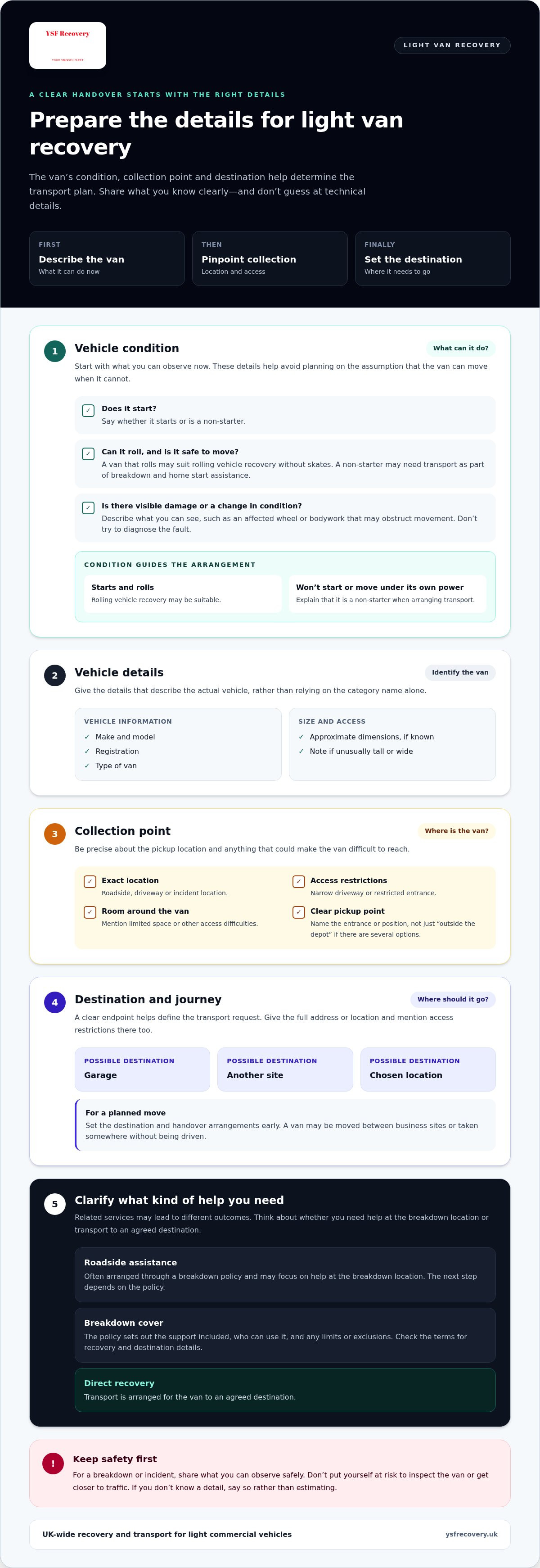
Start with what the van can do now. Does it start? Can it roll? Is it safe to move? A van that rolls may suit rolling vehicle recovery, while a non-starter may need transport as part of breakdown and home start assistance.
Damage can affect how a vehicle should be moved. Describe what you can see, such as an affected wheel or bodywork that may obstruct movement, without trying to diagnose the fault. Mention any change in the van’s condition since you last saw it. This helps avoid planning on the assumption that it can move when it cannot.
Information to have ready before arranging transport
Gather the details that explain the vehicle, pickup and destination:
- Vehicle details: Make, model, registration and type of van. Include approximate dimensions if known, particularly if it is unusually tall or wide.
- Current condition: Say whether it starts and rolls, and describe any visible damage or other issue that could affect moving it.
- Collection point: Give the location and explain access. Mention a narrow driveway, restricted entrance, limited room around the van or anything else that could make it difficult to reach.
- Destination: Provide the full address or location, plus any access restrictions. This makes the intended journey clear.
Be specific about both ends of the journey. “Outside the depot” may not be enough if there are several entrances or the van is behind a building. A precise pickup point, access notes and a clear destination reduce uncertainty, particularly when a fleet vehicle is away from its usual site.
For planned transport, gather the details before the move. For a breakdown or incident, share what you can observe safely. Don’t put yourself at risk to inspect the van or get closer to traffic. If you don’t know a detail, say so rather than estimating.
YSF Recovery provides UK-wide recovery and transport for light commercial vehicles. Have the vehicle details, condition, collection point and destination ready when arranging light van recovery with YSF Recovery.
Light van recovery, breakdown cover or roadside assistance?
These terms describe related but different ways to arrange help. Roadside assistance is often a benefit within a breakdown policy. Breakdown cover is the wider policy, with support set by its terms. Direct recovery is arranged for a specific vehicle and destination. Think about the outcome you need before choosing how to arrange it.
Roadside assistance: Help is arranged through a breakdown policy and may focus on assistance at the breakdown location. The next step depends on the policy.
Breakdown cover: The policy sets out what support is included, who can use it and any limits or exclusions. Recovery may be included, but the destination and circumstances covered depend on the terms.
Direct recovery: You arrange transport for the van and specify where it needs to go. This can suit a particular move, such as taking a vehicle from a roadside location to a chosen site.
What breakdown cover may provide
A breakdown policy may include roadside assistance, recovery or both. Cover levels and exclusions vary, and the policy may set conditions for where help applies and what happens after roadside assistance. Read your policy wording to understand what it covers. An insurance policy and a recovery service are not the same purchase.
This distinction can matter for a fleet. One vehicle may be covered under a policy while another needs a separate transport arrangement. Don’t assume that roadside assistance automatically includes transport to any destination you choose. Check the policy wording for the scope of recovery.
When direct recovery may fit better
Direct recovery may suit you when the main requirement is to move the van to a chosen destination, rather than arrange assistance through a breakdown policy. Examples include a planned move between sites, transport after a non-impound incident or moving a van that won’t start. Have a clear destination in mind, as it forms part of the transport request.
It can also be a practical option when you don’t have relevant breakdown cover or the move falls outside the support your policy provides. The right choice depends on the van’s condition and the terms of your cover. If you need transport, describe the vehicle and destination. If you need to understand an existing cover entitlement, refer to the policy wording.
YSF Recovery provides UK-wide recovery and transport for light commercial vehicles, including breakdown and home start assistance and long-distance transport. For a direct transport requirement, arrange light van recovery to an agreed destination.
How to prepare for a light van recovery
Start with personal safety, then gather the details needed to explain where the van is, its condition and where it needs to go. Don’t inspect or move the vehicle if doing so could put you or anyone else at risk.
Before recovery is arranged
Describe the collection point as precisely as possible, including any narrow entrance, locked gate or limited space. Be ready to say whether the van starts, rolls or has visible damage, then decide on the destination. These details help make the collection and transport requirements clear.
- Make the situation safe. If the van is on the road, move yourself to a safe place only when it is safe and practical. Don’t attempt to move the van if its condition or location makes that unsafe.
- Pinpoint the pickup location. Give the road or site name and explain exactly where the van is positioned. Include useful access information, such as which entrance to use or whether access is restricted.
- Describe the vehicle accurately. Have the make, model and registration ready. State whether it starts and rolls, and describe visible damage or anything else that could affect moving it.
- Set out the destination. Give the location where you want the van taken. Explain any access restrictions there, so both the collection and delivery points are clear.
While waiting for the recovery vehicle
Keep safety first. Follow instructions from relevant emergency responders, and don’t stand near the van or traffic if it isn’t safe. Keep the keys and essential vehicle details accessible only if you can do so safely. Confirm who will meet the recovery vehicle and how the handover at the destination will work.
For a fleet, tell the relevant colleague or site contact about the plan. Make sure they have the vehicle details and destination, particularly if they will receive the van. If circumstances change, such as access becoming blocked or the van’s condition worsening, pass on the update instead of relying on the original description.
Once the pickup, vehicle condition and destination are clear, you’re ready to arrange light van recovery. Arrange UK-wide light van recovery with YSF Recovery for transport planned around the van’s condition and intended destination.
Arrange UK-wide light van recovery with YSF Recovery
YSF Recovery provides recovery and transport for light commercial vehicles across the UK. The right option depends on what the van can do and why it needs moving. A rolling vehicle, a non-starter and a van involved in a non-impound accident may each need a different arrangement. Explain its condition and destination so the request reflects the job.
Recovery options for different light van situations
If the van can roll, rolling vehicle recovery can move it without skates. If it won’t start, breakdown and home start assistance includes transport for non-starting vehicles. After a non-impound accident, YSF Recovery transports the van directly to your chosen destination. Describe what has happened so the recovery arrangement can match the circumstances.
For a fleet, the destination may be central to the decision. You may need a van transported from its current location to a site chosen by your business. YSF Recovery also provides long-distance transport across the UK for private van owners and commercial users who need a vehicle moved between locations. Recovery and transport focus on moving the vehicle, not diagnosing or repairing it.
What to include in a recovery request
Give a clear account of the vehicle and the move. Include its make, model and registration, whether it starts or rolls, and any visible damage. Describe the pickup location and access, then give the destination and any restrictions there. For fleet transport, include relevant site or handover details so the requested journey is clear.
Accurate information distinguishes a rolling van from a non-starter and makes the collection and delivery points easier to understand. If the vehicle’s condition changes, update the details you provide. You don’t need to guess at a technical fault; a straightforward description of what you can see and whether the van moves is useful.
YSF Recovery provides UK-wide light van recovery for breakdowns, non-impound accidents and transport to a chosen destination. Keep the vehicle and location details to hand, then request light van recovery from YSF Recovery.
Plan the van’s next move
When a van can’t continue, deciding where it should go is a practical first step. Gather accurate details and choose transport suited to its condition. A clear destination gives the journey a defined endpoint.
YSF Recovery provides UK-wide recovery and vehicle transport for light commercial vehicles. Options include rolling recovery without skates for suitable vans, direct transport to your chosen destination after a non-impound accident, and breakdown and home start assistance that includes transport for non-starting vehicles. These services help private owners and fleet managers arrange light van recovery around the vehicle’s situation and destination.
Before making a request, have the registration, collection point, vehicle condition and destination ready. For a fleet, decide who will receive the van and share any handover details. Then Request light van recovery from YSF Recovery.
Frequently Asked Questions
How much does light van recovery cost?
The charge depends on the recovery and transport requested. YSF Recovery charges call-out and transport fees, so the cost varies by job. The vehicle’s condition, pickup location and journey help define the service needed. To request light van recovery, use the website and have the vehicle details, pickup location and destination ready.
Can I arrange light van recovery without breakdown cover?
Yes. You can arrange recovery directly without relying on breakdown cover. Keep that separate from any insurance claim. Whether your policy contributes to recovery costs depends on its wording, limits and the circumstances. If you plan to claim, read your policy terms before assuming the expense is covered. A policy may treat a planned vehicle move differently from help after a breakdown.
How long does light van recovery take?
There isn’t a fixed arrival or delivery time. Timing depends on the pickup location, the van’s condition, the circumstances and the journey. Give a precise location and explain access, such as which entrance serves a business site. If the van is in an unsafe position, prioritise your safety and follow instructions from emergency responders rather than approaching it to gather details.
Can a loaded light van be recovered?
A load can affect the van’s overall weight and the practical arrangements for moving it. Mention any cargo and describe the vehicle accurately when arranging transport. Don’t assume the load can remain in the van or that every vehicle and cargo combination is suitable. If you can do so safely, note whether the load is secured and whether it affects access to the vehicle.
Do I need to stay with my van during recovery?
Whether you need to remain at the pickup point depends on the location and handover arrangements. Keep your phone available and provide clear information about access, the vehicle and its destination. If you can’t stay, explain that when arranging the service so the handover can be planned. Don’t leave keys or personal belongings in an unsecured van. Follow any instructions from emergency responders if they’re involved.
Can light van recovery take a van to a destination I choose?
Yes, give the required destination when arranging transport. Provide the pickup and delivery locations, plus any access details that could affect either end of the journey. For non-impound accident recovery, YSF Recovery transports the vehicle directly to your chosen destination. Breakdown policies may set different recovery terms, so read your policy wording if you plan to use its benefits.


